
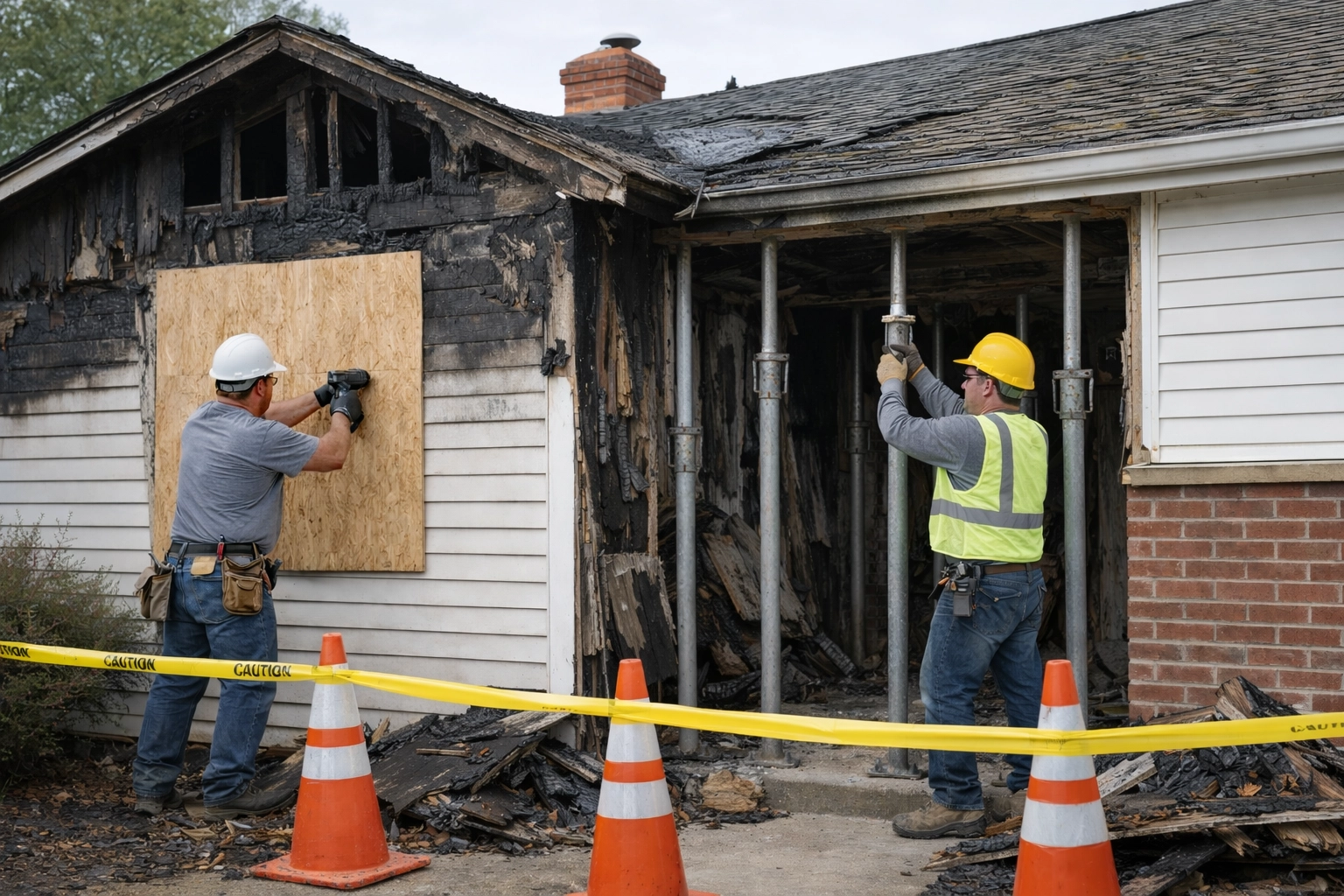
If your Philadelphia property has been damaged by fire, structural collapse, or severe deterioration, you've probably heard the term "Make Safe" thrown around by L&I inspectors or contractors. But what does it actually mean, and more importantly, how do you protect yourself from getting ripped off during one of the most vulnerable moments of property ownership?
Let's break it down.
What Is a Philly Make Safe?
A Make Safe is an emergency repair permit issued by Philadelphia's Department of Licenses and Inspections (L&I) when a building becomes structurally unsafe. This typically happens after:
- Fire damage that compromises walls, roofs, or load-bearing structures
- Partial collapse or severe deterioration
- Violations issued by the city for unsafe conditions
The Make Safe permit allows you to stabilize and secure the property immediately, before you can even think about full renovations. It's not a renovation permit. It's a life-safety permit that requires you to shore up walls, remove hazardous debris, weatherproof the structure, and bring it back to a condition where it's not a danger to occupants or neighbors.
This is not your typical construction project. It's harder, riskier, and requires a different level of expertise.

Why Make Safe Work Is Different (and Harder)
Here's the reality: Make Safe work is a whole different animal compared to standard renovations.
You're working with a compromised structure. Walls may be unstable. Floors might be questionable. You're not just installing new finishes, you're literally holding the building together while you figure out what comes next. That requires:
- Structural engineering assessments (usually around $3,800 just for the report)
- Licensed contractors who understand fire-damaged properties
- Immediate compliance with L&I to avoid demolition orders or fines
- A water-tight envelope to prevent further damage
Most contractors don't want to touch Make Safe work because it's complicated, risky, and requires a level of accountability that some aren't willing to provide. And that creates an opportunity for bad actors to prey on desperate homeowners.
A War Story: When a Contractor Took the Money and Ran
Here's a real story we've seen too many times in Philadelphia:
A homeowner's property suffered fire damage. L&I issued a Make Safe violation. The homeowner, stressed, overwhelmed, and desperate, found a contractor who promised to "take care of everything."
The contractor asked for several thousand dollars upfront to "cover materials and pull the permit."
The homeowner paid.
The contractor never pulled the permit. Never showed up again. Never answered the phone.
The homeowner was left with a violation still open, money gone, and zero progress on the property. Worse? They were now facing additional fines and a ticking clock from the city.
This is not uncommon. Scammers know that fire-damaged properties create panic, and panic creates bad decisions.

Contractor Red Flags and Financial Boundaries You Need to Know
If you're hiring a contractor for Philadelphia fire restoration or Make Safe work, protect yourself with these rules:
🚩 Red Flags to Watch For:
- Asking for full payment upfront (or even more than 30%)
- No verifiable PA Home Improvement Contractor (HIC) license or contractor credentials
- Can't provide references or past Make Safe project examples
- Vague scope of work or refusal to put agreements in writing
- Pressuring you to skip permits or "work around" L&I
- No communication after deposit is made
✅ Financial Boundaries You Should Set:
- Never pay more than 10-30% upfront (industry standard for deposit)
- Use milestone-based payments tied to inspections and completed work phases
- Require proof that permits have been pulled before releasing any funds
- Get a written contract detailing scope, timeline, cost, and permit responsibilities
- Verify contractor licensing through Pennsylvania's HIC registry
Bottom line: If a contractor can't show you permits, references, and a clear plan: walk away.
A E Talley Construction: Your Advocate, Not Just Your Contractor
At A E Talley Construction, we work with developers, investors, and builders: but we also work with "mom and pops" who are navigating the stress of fire damage and Make Safe violations for the first time. We get it. This isn't just about bricks and lumber. It's about your home, your investment, and your peace of mind.
We've spent years building our reputation in Philadelphia by operating on a simple philosophy:
People. Process. Product.
- People: We treat every client like a partner. We explain what's happening, why it's happening, and what comes next. No surprises. No runarounds.
- Process: We follow the permit process the right way. That means structural assessments, proper documentation, and full compliance with L&I: because shortcuts cost you more in the long run.
- Product: The finished result is a structurally sound, code-compliant property that's ready for the next phase: whether that's a full rehab or a resale.
We don't take money and disappear. We don't pressure you into decisions. And we sure as hell don't skip permits.
If you're dealing with a Make Safe situation in Philadelphia, contact us. We'll walk you through what's required, what it'll cost, and what your options are: no BS, no upselling, just honest guidance.

How to Move Forward After Fire Damage
If you've received a Make Safe violation or you're dealing with fire restoration in Philadelphia, here's your action plan:
- Hire a licensed structural engineer to assess the damage and create repair plans
- Find a licensed contractor who specializes in Make Safe work (and check their references)
- Get everything in writing: scope, timeline, payment schedule, and permit responsibilities
- Verify the permit has been pulled before making any payments beyond a small deposit
- Stay in contact with L&I to ensure compliance and avoid additional penalties
And if you're not sure where to start? Reach out to us. We've helped dozens of Philadelphia property owners navigate this exact situation.
Ready to Protect Your Property the Right Way?
Don't let a fire turn into a financial disaster. Whether you're a first-time homeowner or a seasoned investor, A E Talley Construction is here to advocate for you through the Make Safe process.
📞 Call us or visit our contact page to schedule a consultation.
📺 Subscribe to our YouTube channel for more Philly construction insights, war stories, and real talk about navigating L&I, contractors, and property challenges.
SEO Meta Information
Meta Title:
Philly Make Safe Explained: Avoid Contractor Scams After Fire Damage
Meta Description:
What is a Philadelphia Make Safe permit? Learn how to protect your home after fire damage, avoid contractor scams, and work with a licensed Make Safe contractor in Philly.
Frequently Asked Questions (FAQs)
1. What is a Make Safe permit in Philadelphia?
A Make Safe permit is an emergency permit issued by L&I to stabilize a structurally unsafe building after fire, collapse, or severe deterioration.
2. How much does a Make Safe cost in Philadelphia?
Costs vary, but expect $3,800+ for a structural engineer's report, plus contractor fees for stabilization work. Always get itemized estimates.
3. Can I do Make Safe work myself?
Only if you own and occupy a one- or two-family home. Otherwise, you must hire a licensed Philadelphia contractor.
4. How long does a Make Safe permit take to get approved?
L&I typically processes Make Safe applications within 5 business days, but timelines vary based on complexity.
5. What happens if I ignore a Make Safe violation?
Ignoring a Make Safe violation can result in fines, additional enforcement actions, or even a city-ordered demolition of your property.

Leave A Comment